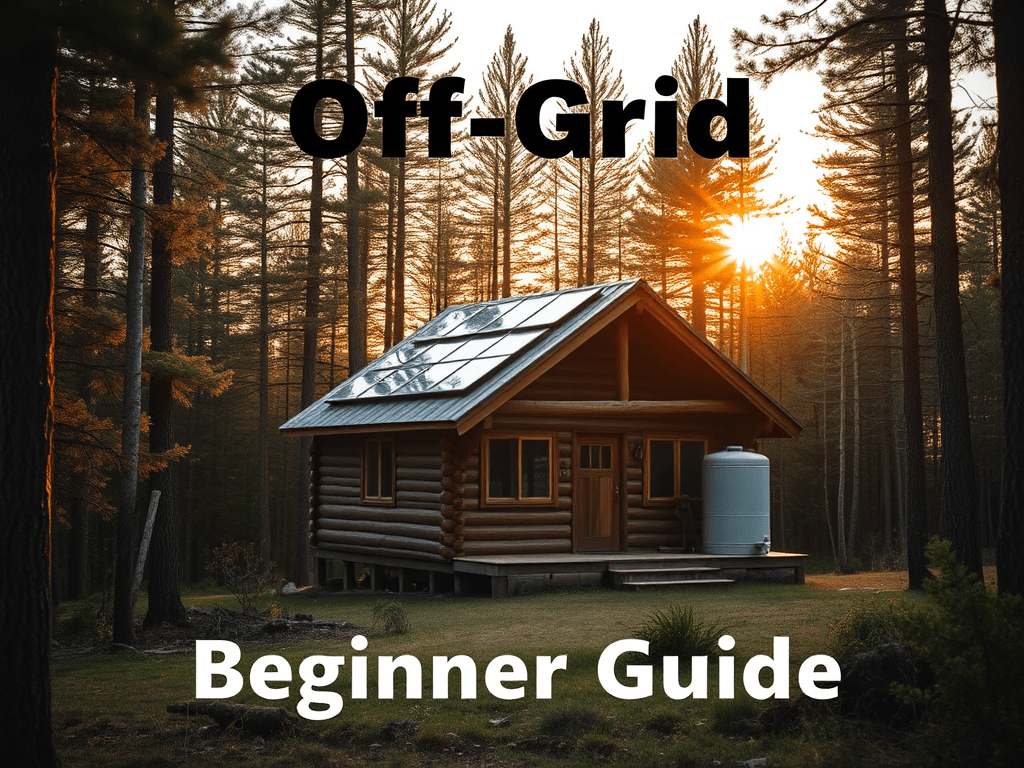
[Off-Grid 101: Beginner Guide #4]
When people dream about going off-grid, they think about solar panels, chickens, and maybe a rustic cabin with good lighting. What they don’t think about is water. Until they’re sitting in the woods, dehydrated, staring at a bucket and whispering, “How hard can this be?”
Spoiler: It’s hard. If you mess this up, you won’t be vibing in the forest—you’ll be googling “signs of mild organ failure.”
Let’s talk about off-grid water: what works, what fails, and what you absolutely need to know before your romantic homesteading dream turns into a dry, dusty regret.
1. Water Is Life. Literally. It’s Not Just a Vibe
Without electricity, you’ll sweat. Without internet, you’ll journal.
Without water? You’ll die.
And not just drinking water—you also need it for:
- Cooking
- Washing dishes
- Showering occasionally (hopefully)
- Flushing toilets or composting poop responsibly
- Keeping plants alive so you don’t starve
2. Your Options: Ranked by How Much They’ll Break You
✔️ A Well
- Pros: Consistent, deep water, weather-resistant
- Cons: $$$$, needs power to pump, drilling feels like black magic
If your property has a well, congratulations—you win. Protect it with your life.
✔️ Rainwater Catchment
- Pros: Sustainable, legal in many places, feels very cool
- Cons: Limited to rainfall, needs filtration, may freeze and betray you
You’ll need:
- Gutter systems
- First-flush diverters
- Big tanks (IBC totes, barrels, cisterns)
- Filters (sediment + bacteria + existential dread)
And yes, you can shower in rainwater. Just don’t think about it too much.
✔️ Surface Water (Stream, Lake, Pond)
- Pros: Fairly constant, free
- Cons: Needs serious filtration or treatment, may be legally restricted, attracts wildlife and sketchy algae
If you plan on using surface water, get a good pump, good filters, and possibly a priest to bless it.
3. Water Filtration: Not Optional, Unless You Want Giardiasis as a Roommate
Off-grid water must be filtered. Boiling alone isn’t enough if your source is swamp-adjacent.
Minimum setup:
- Sediment pre-filter (to catch sand, bugs, regret)
- Carbon filter (to kill taste and smell)
- UV or ceramic/bio filter (to kill the stuff that kills you)
Want bonus points? Add a Berkey. Want to live dangerously? Skip it and see what happens. (Don’t.)
4. How Much Water You Actually Need (It’s More Than You Think)
For one person:
- Drinking + cooking: 1–2 gallons/day
- Washing + hygiene: 3–5 gallons/day
- Plants/garden: As much as your emotional support kale requires
Minimum per person per day? 5–10 gallons
And if you think, “I’ll just use less!”—you won’t. You’ll just get stinkier and angrier.
5. Winter Is a Water-Killing Nightmare
Freezing temps = frozen pipes, cracked tanks, and sad mornings with no tea.
You’ll need:
- Insulated pipes
- Heated pump housing
- A shovel and a bad attitude when things go wrong anyway
6. Greywater: Reuse It Like You’re Broke (Because You Are)
Greywater = used water from sinks/showers
You can reuse it to:
- Water trees
- Flush toilets
- Feel superior
But check your local laws, because apparently even dirty water needs paperwork.
Final Thought
Water is the most boring, most critical part of going off-grid. You can fake electricity. You can wear the same clothes for six months. But you can’t fake hydration.
Plan for water before you move off-grid—not after your third day of dry pasta and tears. Build redundancy. Respect the logistics. And maybe keep a gallon jug nearby for those “oops” moments.

Leave a comment