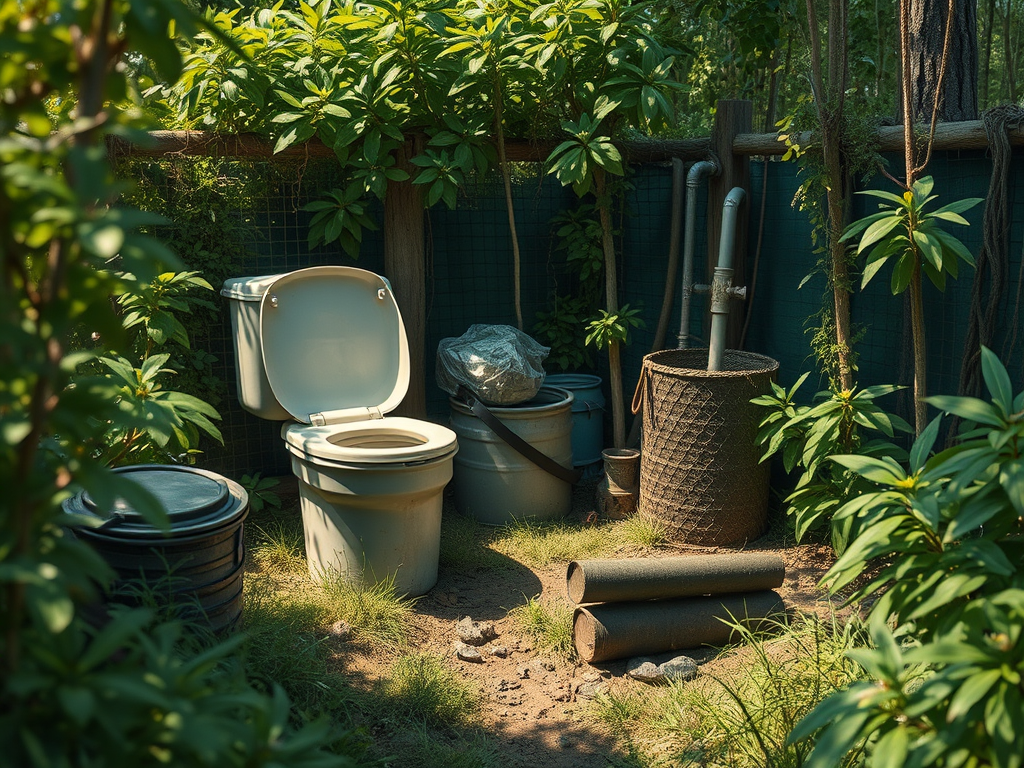
Forget complicated plumbing or foul-smelling outhouses. These no-flush toilet systems are simple, clean, smell-free—and perfect for any off-grid or low-impact lifestyle.
Why Go No-Flush?
When you’re living off-grid, water is gold.
Every flush? About 6 liters down the drain.
Plumbing? Expensive, leaky, and usually impossible to install in remote land.
That’s why thousands of people—myself included—are switching to dry toilet systems.
And no: they don’t stink, attract bugs, or require constant emptying.
If done right, they’re more hygienic and eco-friendly than most city toilets.
The Best No-Flush Toilet Systems (Ranked)
Here are 4 time-tested options—from free DIY setups to premium long-term investments:
🪵 1. The Humanure Bucket System (What I Use)
Cost: $0–$40
Smell: 🟢 None if carbon cover used
Best for: Beginners, cabins, tiny homes, extreme budgets
How it works:
- 5-gallon bucket + toilet seat
- After each use: add scoop of dry carbon (sawdust, leaves, shredded paper)
- Lid closed at all times
- Dump full bucket into outdoor humanure compost pile
Must-haves:
- Cover material (dry, high-carbon)
- Sealed compost pile (away from water source)
👉 Tip: Keep a small shovel nearby for convenience
👉 Optional: Line the bucket with paper bag for easier cleaning
I’ve used this for 200+ days — no smell, no hassle.
🌿 2. Urine-Diverting Dry Toilet (UDDT)
Cost: $80–$500 (DIY or prefab)
Smell: 🟢 Very low
Best for: Long-term off-grid homes or shared setups
Why it’s special:
- Urine and solids separated (less smell, faster composting)
- Solids go to a sealed bin (with carbon material)
- Urine diverted to a greywater system, soak pit, or garden (with proper care)
👉 Example product: Separett Villa
👉 DIY version: Funnel + diverter pipe
Separation = less smell, faster dry time, safer composting.
🔋 3. Electric Incinerating Toilet
Cost: $1,500–$4,000
Smell: 🟢 Odorless (if vented properly)
Best for: Cabins with solar power, no compost space
How it works:
- Uses electricity to burn waste to sterile ash
- No composting, no water, no drain
- Vent required (to release smoke)
👉 Popular brand: Incinolet
Extremely low-maintenance but requires consistent power.
🔥 4. Biogas or Biodigester Toilet
Cost: $300–$1,000+
Smell: 🟡 Mild (depends on build)
Best for: Advanced homesteads that want to convert waste into fuel
How it works:
- Human waste is processed anaerobically
- Produces biogas (can power stove or heater)
- Requires temperature control and regular feeding
👉 HomeBiogas 2.0 is one option
👉 Needs a warm climate to function year-round
Turns your 💩 into energy. Not beginner-friendly, but brilliant if you’re ready.
Comparison Table
| System | Cost | Smell | Skill Level | Needs Power? | Best For |
|---|---|---|---|---|---|
| Bucket Compost Toilet | $0–$40 | 🟢 None | 🟢 Easy | ❌ No | Beginners, low-budget |
| Urine-Diverting Toilet | $80–$500 | 🟢 Low | 🟡 Medium | ❌ No | Long-term off-grid homes |
| Incinerating Toilet | $1.5k–$4k | 🟢 None | 🟡 Medium | ✅ Yes | Cabins with solar |
| Biogas Toilet | $300–$1k+ | 🟡 Mild | 🔴 High | ⚠️ Sometimes | Full-time homesteaders |
My Routine: Zero-Smell Humanure in Practice
- Go in bucket toilet (lined or bare)
- Cover with scoop of sawdust or shredded leaves
- Once full: close tightly + carry to compost
- Dump onto dedicated humanure pile
- Cover with straw or dry material
- Wash bucket with greywater + vinegar
- Repeat
Compost stays hot and active. No smell. No flies. No regret.
💬 Community Tip Exchange
🧻 What’s your no-flush setup like?
Post photos, diagrams, or daily tips in our Community — we’re building a real-world solutions archive.
🌿 Ready to Start? Explore more:
Leave a Reply