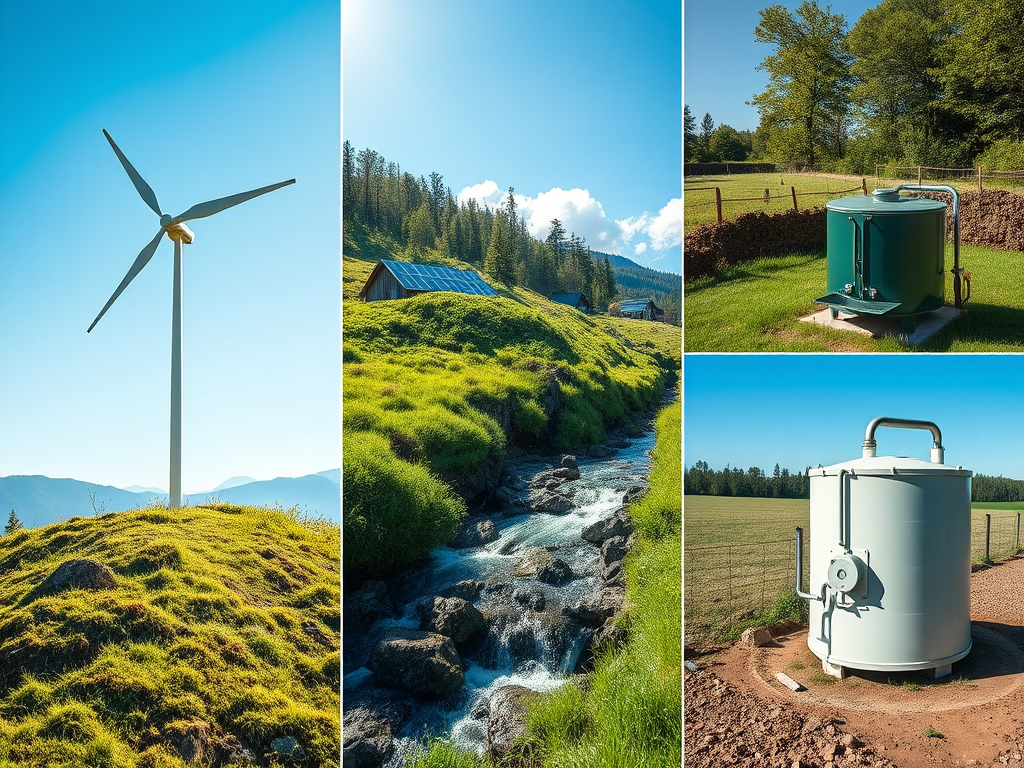
“Let’s talk more about power—because Year One was all about “just enough,” and Year Two is when you realize: maybe I want to run a freezer, some lights, a laptop, and my will to live without tripping a fuse every time you make toast.”
You survived with your cute little solar panel and two questionable batteries. But now? You want reliability. Redundancy. Power without panic. Welcome to the next level of off-grid energy—where your dreams are measured in watts and your budget dies quietly in the corner.
Here’s how to expand your off-grid power system without frying your gear, yourself, or your fragile emotional stability.
⚡️ Step 1: Understand Your Actual Power Needs (Stop Guessing, Chad)
You’re not “just living simply.” You have devices. Be honest.
Make a Power Inventory:
- List every device you use
- Note the wattage and hours per day
- Add it all up = daily kWh usage
- Add 20–30% for inefficiencies, cloudy days, and random nonsense
Examples:
- Laptop: 60W × 4hr = 240Wh
- LED lights: 10W × 5hr = 50Wh
- Blender of ambition: 500W × 10min = 83Wh
- Mini fridge: 300–600Wh/day
- Sad electric kettle you keep trying to use = total system meltdown
☀️ Step 2: Solar Panel Upgrade Time
Your Year One panel was cute. Now it’s time to go big or blackout.
Panel Math:
- 1,000W of panels = 4–6 kWh/day (in good conditions)
- South-facing, 30–45° tilt = ideal
- Clean panels = more power (not “pollen-encrusted hope”)
Go for more watts than you think you need. Why? Because clouds exist. And so do appliances with ambition.
🔋 Step 3: Bigger Battery Bank = Bigger Peace of Mind
Your battery bank should store at least 1.5–2 days worth of power use. Why? Because the sun isn’t loyal.
Battery Types:
- Lead-acid (AGM or flooded): cheaper, heavier, high maintenance
- Lithium (LiFePO4): expensive, long lifespan, lighter, less drama
Avoid the mistake of stacking solar panels onto a weak battery bank. That’s like pouring water into a thimble and wondering why your plants are dying.
🔌 Step 4: Get a Real Inverter (No, That Sketchy $89 Box Isn’t It)
Your inverter converts battery DC into appliance-friendly AC. Your blender wants AC. Your phone wants to survive.
Tips:
- Match inverter size to peak loads (microwaves, power tools, toaster revolt)
- Pure sine wave = safe for sensitive electronics
- Oversize a bit: 1,500W is fine, 3,000W is comfy, 5,000W is “I like options”
Also… please mount it somewhere that doesn’t get wet or house spiders.
🌬 Step 5: Add Backup Sources (Because the Sun Is a Diva)
Wind:
- Works best where… you have wind.
- Small turbines = 200–400W on average
- Pair well with solar for nighttime storms
- Needs maintenance. And therapy if it sounds haunted.
Generator:
- Gas/propane/diesel = reliable, loud, smells like defeat
- Essential for emergencies or running power tools
- Don’t rely on it every day unless you enjoy fuel dependency
Micro-hydro:
- Got a stream? Lucky you. Constant trickle = endless smugness.
- More consistent than solar if designed right
- Hard to set up, but amazing long-term
🧠 Step 6: Power Smart, Not Just Hard
Reduce Usage:
- Replace all lights with LEDs
- Use DC appliances when possible
- Cook with propane or wood, not electricity
- Insulate EVERYTHING—fridges, cabins, and your expectations
Monitor Your System:
- Use a battery monitor or app
- Check usage patterns
- Celebrate the day you run the toaster without guilt
🔥 Step 7: What to Do When It All Breaks Anyway
Because it will. Eventually.
- Have spares: fuses, wires, tools
- Learn basic electrical: not sexy, but necessary
- Label every wire like your life depends on it (it does)
- Don’t panic when the inverter beeps at 2 a.m.—just unplug something and try not to cry
Final Thought
Upgrading your off-grid power system isn’t about having everything—it’s about having enough to live well, without sacrificing sanity or your ability to use a blender during daylight hours.
Start small, expand smart, and remember: no one wins by overloading a single battery while trying to toast bread and edit YouTube videos in a snowstorm.
Ready for the last article in the Second-Year series?
“Social Life in the Woods: How to Have Friends When You Smell Like Fire”
Because let’s face it: you haven’t made eye contact with another human in 3 weeks and you’ve named a tree “Debra.”
[Join the Community to explore our free Resource Base]

Leave a comment