“Good. Food security — the sexy, glamorous topic of how not to starve quietly in your beautifully curated off-grid pantry. Let’s do this.”
You’ve got chickens. You’ve got a garden. You’ve got three slightly judgmental jars of pickled carrots staring at you from the top shelf. But Year Three is where you stop playing snack-farmer and start building your pantry like your life depends on it.
Because, well… it does.
Let’s turn your food system into a bunker of smug self-reliance.
🧮 Step 1: Actually Track What You Eat (So You Don’t Stock 40 Pounds of Lentils and Cry)
Start Here:
- Write down everything you eat for one month
- Multiply for the whole year (math, yay)
- Then decide how much of that you can realistically grow, raise, or preserve
Now compare that to what you currently produce.
If the gap looks like the Grand Canyon, don’t worry—everyone’s does.
Welcome to strategic hoarding, homestead edition.
🪵 Step 2: Storage Methods That Won’t Attract Mice, Mold, or Existential Regret
Dry Storage (Grains, Legumes, Flour):
- Mylar bags + oxygen absorbers inside food-grade buckets = apocalypse-proof
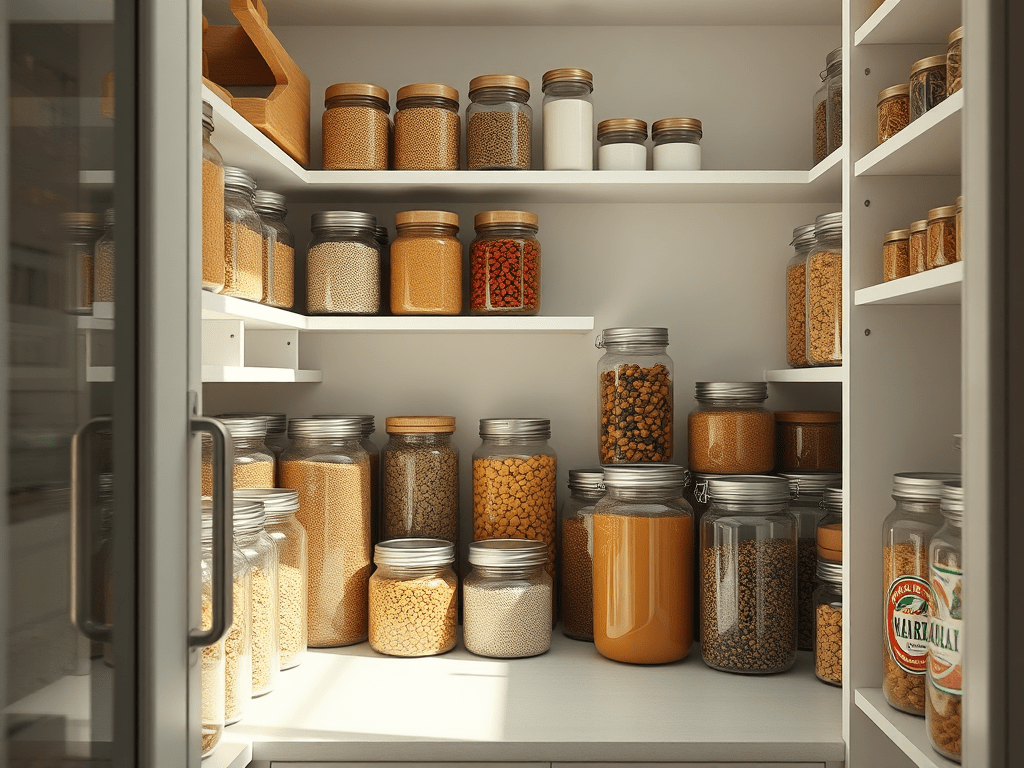
- Glass jars for small batch pantry stuff (and Instagram)
- Keep cool, dark, and dry unless you want pantry soup in July
Cold Storage:
- Root cellar for potatoes, carrots, squash, etc.
- Basement/insulated room with airflow
- Burying things in sand = surprisingly effective (and rustic!)
Frozen Foods:
- If you’ve got reliable solar + chest freezer = amazing
- But: one power outage and your future meatloaf is now soup
Canned Goods (the Homesteader’s Currency):
- Pressure can meats, beans, soups
- Water-bath fruits, pickles, jams
- Rotate your stock. Eat the ugly ones first.
🌽 Step 3: Grow for Calories, Not Just Aesthetic Tomatoes
Those rainbow cherry tomatoes won’t keep you alive in February. You need bulk fuel.
Calorie-Dense Heroes:
- Potatoes: 1,000+ calories per pound. Easy. Loyal. Delicious.
- Winter squash: Store well, fill you up
- Corn (dry): Grind it, make cornbread, feed chickens
- Beans: Fiber + protein + prepper credibility
- Grains (wheat, oats): Advanced mode, but possible
Don’t stop growing greens and fun crops. Just… stop pretending kale chips are a food group.
🥚 Step 4: Raise Animals That Feed You Back
You’re past the stage of naming every chicken.
Easy Livestock Options:
- Chickens: Eggs + meat. Feed them scraps, bugs, bad vibes.
- Ducks: Lay through winter. Less drama, more mud.
- Rabbits: Quiet, efficient meat machines.
- Goats or sheep: Milk, meat, and emotional problems.
Store extra feed. Like, a lot of it. Or grow forage crops to reduce dependency.
🧄 Step 5: Preservation Is the New Power Move
Learn all the ways:
- Canning (yes, you’ll eventually enjoy it)
- Dehydrating (especially herbs, fruits, jerky)
- Fermenting (kraut, kimchi, weird but powerful)
- Smoking/salting meat if you’re going full 1800s
- Freezing (backup only)
Rotate your stash. Date your jars. Label like you’re preparing for a pantry audit.
🔁 Step 6: Redundancy = Sanity
Bad things happen:
- Gardens fail
- Predators win
- Weather throws tantrums
Have backup plans:
- Grow multiple varieties of key crops
- Preserve food multiple ways
- Store some commercial staples (rice, flour, oil, pasta) as insurance
It’s not cheating to have store-bought stuff. It’s smart.
📦 Step 7: The Emergency Pantry Within the Pantry
You need a grab-n-go stash:
- Canned meals
- High-calorie snacks
- Water filtration
- Vitamins, salt, oil
- Chocolate (yes, it’s medicinal)
This is your backup for when everything else goes sideways. And it will.
Final Thought
Food security is about freedom. It’s the difference between “what can I eat today?” and “how many different ways can I cook this jar of beans?”
You’re not just surviving anymore. You’re building a pantry that feeds your future self. One can, crop, and pickle jar at a time.
You don’t have to be perfect. You just have to be prepared enough to not cry in front of your chickens.
Next up:
“Yes, You’re Getting Livestock: The Next Logical Mistake”
Because you looked at a goat and thought, “What could possibly go wrong?” Shall we?
[Join the Community to explore our free Resource Base]

Leave a comment