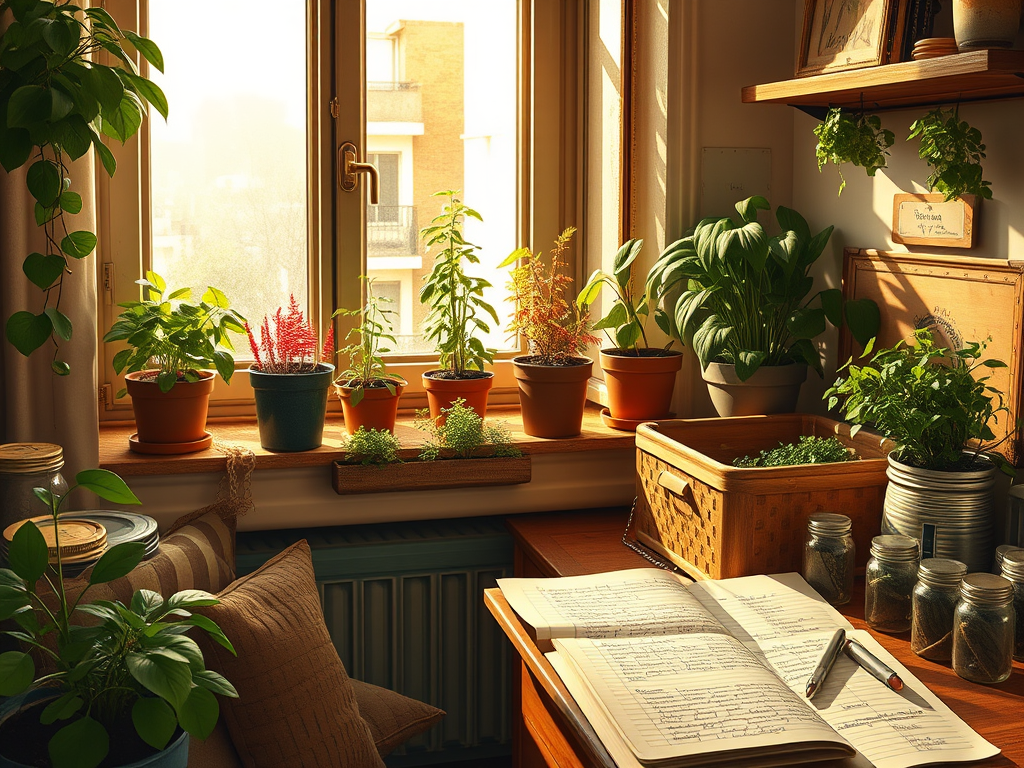
No, you don’t need a barn.
No, you don’t need land.
No, you don’t need to quit your job and churn butter while screaming into a ball of wool.
What you need is a plan.
What you don’t need is to doom-scroll another influencer’s “homestead reveal” while eating stale pita chips in despair.
This guide is your practical, one-month jumpstart into urban homesteading—designed for renters, overthinkers, city dwellers, and reluctant partners.
In 30 days, you won’t have a perfect system.
You’ll have something better: a real one.
🧠 The Ground Rules
- Budget: <$50 total for month one
- Time: ~30 min/day or less
- Space: Apartment, condo, shared flat, whatever
- Philosophy: Action over aesthetic. Progress over perfection.
🛠️ Week 1 – Awaken the Homesteader Brain
Day 1: List what you eat most. (Because growing food you don’t eat is stupid.)
Day 2: Find the sunniest window, balcony, or porch. This is your new “land.”
Day 3: Buy seeds (basil, mint, lettuce, green onions = cheap + easy)
Day 4: Get a container. (Reuse a tub. Stab holes in the bottom. You’re a pioneer.)
Day 5: Plant something edible. Water it. Name it if you want.
Day 6: Inventory your trash. What food scraps are you wasting?
Day 7: Set up a freezer scrap bag or countertop bin for compostables.
🎯 Goal: Know your consumption. Reclaim a square foot of space. Begin to see waste as raw material.
♻️ Week 2 – Close the Loop, Start the Magic
Day 8: Set up a worm bin or bokashi system (indoor compost options)
Day 9: Watch something decompose (yes, really)
Day 10: Learn 1 ferment (kraut or garlic honey = low-fail)
Day 11: Clean out one closet shelf for food storage
Day 12: Buy shelf-stable pantry items you’ll actually eat (lentils, oats, tuna, pasta)
Day 13: Cook one full meal from pantry + fresh herbs
Day 14: Inventory your water: how much you use daily, how much you could store
🎯 Goal: Reduce waste, start storing calories, and accidentally become a mad scientist.
🌿 Week 3 – Preserve, Prepare, and Pickle
Day 15: Make quick-pickled carrots or radishes (you need jars and vinegar, that’s it)
Day 16: Create a food rotation log (not fancy: pen + taped notebook = fine)
Day 17: Store 3 gallons of tap water in reused bottles
Day 18: Build a tiny first aid + herbal kit (include garlic, ginger, mint, honey)
Day 19: Mend something you would’ve thrown away
Day 20: Batch-cook 3 meals with pantry items only
Day 21: Try a “lights out” evening using candles or a solar lamp
🎯 Goal: Build systems of preservation and fallback that reduce panic and increase confidence.
🔌 Week 4 – Resilience + Routine
Day 22: Create a weekly homestead rhythm (watering, feeding, fermenting, rotating)
Day 23: Research your city’s graywater rules (or politely ignore them)
Day 24: Make one cleaning product (vinegar + citrus peels = done)
Day 25: Build a barter box (jams, herbs, candles, food = tradable magic)
Day 26: Talk to a neighbor about what you’re doing (yes, real people)
Day 27: Join a local freecycle, buy-nothing, or skillshare group
Day 28: Reflect: what saved you time? what gave you power? what just felt right?
Day 29: Make a plan for month two. Choose: Grow more? Preserve more? Trade more?
Day 30: Eat a meal that came entirely from your hands, jars, shelf, or windowsill.
🎯 Goal: You don’t live in a bunker. You live in a self-made system that works even if the bigger ones don’t.
💡 What You’ve Built in 30 Days
- A container garden
- A compost/ferment system
- A functional pantry
- A DIY ethic
- A personal philosophy of slower, smarter, smaller-scale survival
All from your apartment. Without a field. Without a farm. Without permission.
📥 Optional Download: “30-Day Urban Homestead Challenge Printable”
Includes:
- Daily prompts
- Beginner pantry tracker
- Grow/ferment log
- “What’s actually working?” reflection sheet
🌿 Ready to Start? Explore more:

Leave a comment