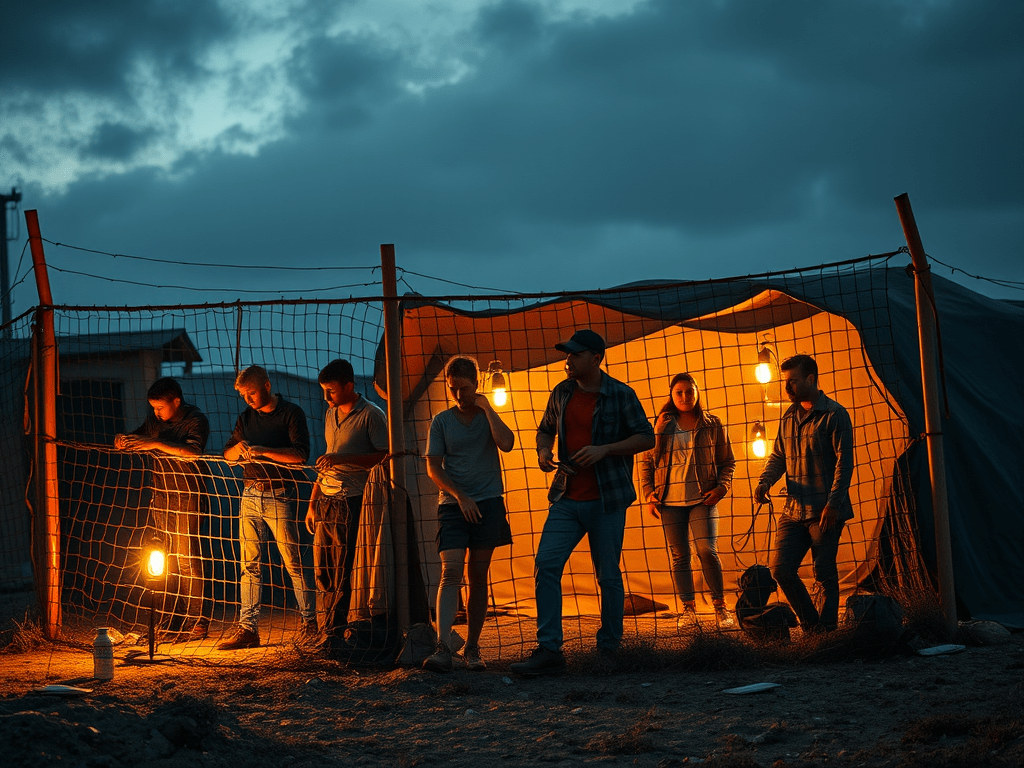
“You wanted your kids to grow up with fresh air, self-reliance, and a deep respect for nature. Now they’re barefoot in November, asking existential questions about compost, and referring to their siblings as ‘the other forest people.”
Here’s how to raise well-adjusted, capable, non-sasquatch offspring while living far from the conveniences (and judgment) of modern society.
🛖 Step 1: Structure in a Land of Chaos
Off-grid life doesn’t have clocks, bells, or PTA meetings. That doesn’t mean your child needs to live on whim and mud.
Build a Daily Rhythm:
- Morning chores = responsibility
- Mid-morning learning time = brain food
- Afternoon = project-based play, outdoor chaos
- Evening = wind-down routine (read, not just collapse)
Structure keeps them grounded. Without it, they’ll build shrines out of pinecones and declare themselves kings of the compost realm.
📚 Step 2: Education That Won’t Get You Reported
Homeschooling Options:
- Unschooling: child-led learning, terrifyingly brilliant, chaotic good
- Classical/Charlotte Mason: literature, nature, actual curriculum
- Online/Hybrid: if you have internet, balance it with actual dirt
- Local co-ops: yes, even remote places have other weird families
Use:
- Library books (homesteading AND fantasy)
- Nature walks (with science, not just wandering)
- Hands-on projects (solar ovens, animal care, math disguised as chicken-feeding)
Pro tip: Document learning loosely. Not everything is a spelling test. Sometimes it’s a discussion about goat digestion that turns into a biology lesson.
🪓 Step 3: Chores, Work, and “Survival Tasks” Without the Guilt Trip
You want them to help—not to burn out by age nine.
Age-Appropriate Jobs:
- 3–5: collecting eggs, watering plants, bossing the cat
- 6–9: kindling, weeding, feeding animals, setting table
- 10–13: firewood, cooking basics, minor construction supervision
- 14+: everything you hate doing
Make chores feel like part of life, not punishment. Praise effort. Let them see the results of their work (e.g., “You fed that chicken. Now you get eggs. This is capitalism.”)
🧠 Step 4: Mental and Emotional Development in Isolation
Off-grid doesn’t mean emotionally cut off. You’re still raising full humans, not tiny survival bots.
- Talk through feelings. Even about dumb stuff.
- Let them be bored—creativity lives there.
- Encourage journaling, storytelling, nature art.
- Teach boundaries, consent, kindness (especially when living in tight quarters with siblings who smell like goats)
Also: let them cry. Let them be angry. Let them feel. Don’t raise repression machines just because you live off-grid.
👯 Step 5: Socialization Without Chuck E. Cheese
They don’t need 500 friends. They need a few good weirdos.
Options:
- Homestead meetups (yes, they exist)
- Skill shares and workshops
- Market days
- Online friendships (if you allow tech)
- Siblings (built-in allies or enemies)
Pro tip: Let them talk to adults too. Not all socialization needs to be with kids who also eat dirt recreationally.
🎮 Step 6: Screen Time (Yes, It’s a Thing Even Here)
The internet will enter your homestead. And guess what? It’s okay.
Set rules:
- Learning-first? Fine.
- Entertainment? Reasonable.
- Mindless TikTok while a chicken sits on their head? Balance that.
Use tech as a tool, not a babysitter. Let them explore, research, and even play games—just make sure they still know how to use a shovel and talk to humans afterward.
🪴 Step 7: Let Them Have Opinions, Passions, and Weirdness
You might be growing homesteaders. You might be raising:
- A future herbalist
- An eco-architect
- A poet-blacksmith
- Someone who leaves the homestead and moves to Tokyo
Let them explore. Let them choose.
You’re not raising clones of yourself. You’re raising people who live on your land for now. Let them become whoever they’re going to be—even if they don’t care about seed saving and secretly hate ducks.
Final Thought
Raising kids off-grid isn’t about molding perfect pioneers. It’s about growing resilient, curious, grounded humanswho know how to think, work, and care for something beyond a screen.
Let them get dirty. Let them ask hard questions. Let them build forts and feelings.
And if they become forest philosophers who name their worms and ask about mortality at breakfast?
Congrats. You’re doing it right.

Leave a comment